
THIS ISPrep Academic

In Years 1 to 6, a thematic approach drives the curriculum.

Sherfield’s Prep curriculum is thoughtfully designed to spark curiosity, build strong foundations and inspire intellectual confidence.

In Junior Prep, a connected curriculum allows children to explore themes across subjects, making learning meaningful and memorable. With specialist teachers in languages, art, drama, sport and music, alongside an exceptional outdoor learning programme, pupils enjoy a rich, balanced and stimulating education.

In Senior Prep, academic life becomes more specialised. Pupils benefit from:

  • Subject experts across all curriculum areas
  • Enhanced science from Year 6 onwards
  • Strengthened reading through Accelerated Reader
  • A strong emphasis on analysis, interpretation and critical thinking
  • Extensive music provision including choir, instrumental learning and theory
  • Pathways Projects that link learning to the real world and future careers

Through this holistic and ambitious approach, pupils leave Prep confident, capable and truly prepared for Senior School and beyond.
Prep Academic Subjects

Core Subjects
  • In Year 1, topic lessons are designed for children to explore their local area and families. Children articulate their learning through exploration, presentations, and practical activities. Children benefit from a mix of child-initiated Discovery Time and teacher-led reading, writing, and mathematics activities. In the curriculum, Discovery Time allows children to initiate their own learning, follow their interests, and reinforce skills meaningfully. This approach ensures a smooth transition from the play-based Early Years Foundation Stage to inquiry-based learning, fostering a love for learning and holistic development.
  • In Year 2, topics are designed to help children explore the wider world and understand cause and effect. They learn about the United Kingdom, including London, and compare their lives to those of children in non-European countries. Children also benefit from child-initiated Discovery Time, which involves engaging in hands-on, play-based activities that reinforce skills and knowledge, fostering a love for learning and holistic development. Children articulate their learning through exploration, presentations, and written responses.
  • In Year 3, children continue to build on their confidence in reading, maths, and writing. They explore extreme geographical elements and begin a journey through time periods, starting with the Stone Age and ending with Ancient Egypt. The class teacher primarily teaches these topics to ensure writing is linked and purposeful, with children writing longer pieces and using structural features for effect.
  • Year 4 builds on Year 3 by exploring Ancient Civilisations, including Invasions, Ancient Greeks, and Ancient Egyptians. Children compare different historical periods, with lessons taught primarily by the class teacher to ensure writing is linked and purposeful.
  • Year 5 builds on Year 4 by exploring crime and punishment throughout history, including Tudor and Victorian life. In the summer term, children study world exploration, focusing on great explorers like Shackleton. The class teacher primarily teaches lessons to ensure purposeful, linked writing activities.
  • Year 6 builds on Year 5 by exploring 20th-century conflict and the impact of migration. In the summer term, students study historical inventors and the concept of innovation. They also delve into evolution and legacy in science, understanding how these concepts shape the modern world. The class teacher primarily teaches lessons to ensure purposeful, linked writing activities.
Phonics, Reading and Writing
  • In Year 1, Daily phonics lessons and regular reading sessions with an adult are key components. Children study key texts to develop a love of literature and interest in key topics. Writing tasks build word and sentence writing skills, focusing on letters and stories.
  • In Year 2, children build on their early reading skills, focusing on fluency and comprehension during regular reading sessions. Towards the end of the year, they are assessed using Accelerated Reader. Writing emphasises addressing different audiences and expanding vocabulary. Based on their learning or interests, they will begin writing longer pieces, including non-narrative reports.
  • In Year 3, writing focuses on vocabulary selection for effect, with increased opportunities for real audiences. Children are assessed regularly on their reading through Accelerated Reader and have daily guided reading sessions focusing on interpretation, comprehension, and vocabulary building.
  • In Year 4, children develop writing for different audiences and use more complex sentence structures. Children are assessed regularly through Accelerated Reader and have daily guided reading sessions, focusing on interpretation, deduction skills, and making informed book choices.
  • In Year 5, children refine their writing skills across various genres, drawing from their reading to develop a unique writer's voice. Children are regularly assessed through Accelerated Reader and participate in daily guided reading sessions, with an emphasis on independent reading and applying their learning in writing. They develop interpretation and deduction skills, make informed book choices, and share book recommendations.
  • In Year 6, children are seen as authors, working to publish pieces across a range of genres. They develop a strong writer's voice influenced by extensive reading. Regular assessments through Accelerated Reader, daily guided reading sessions, and independent reading are integral. The focus is on interpretation and deduction, with children making informed book choices, sharing their preferences, and making recommendations.
Mathematics

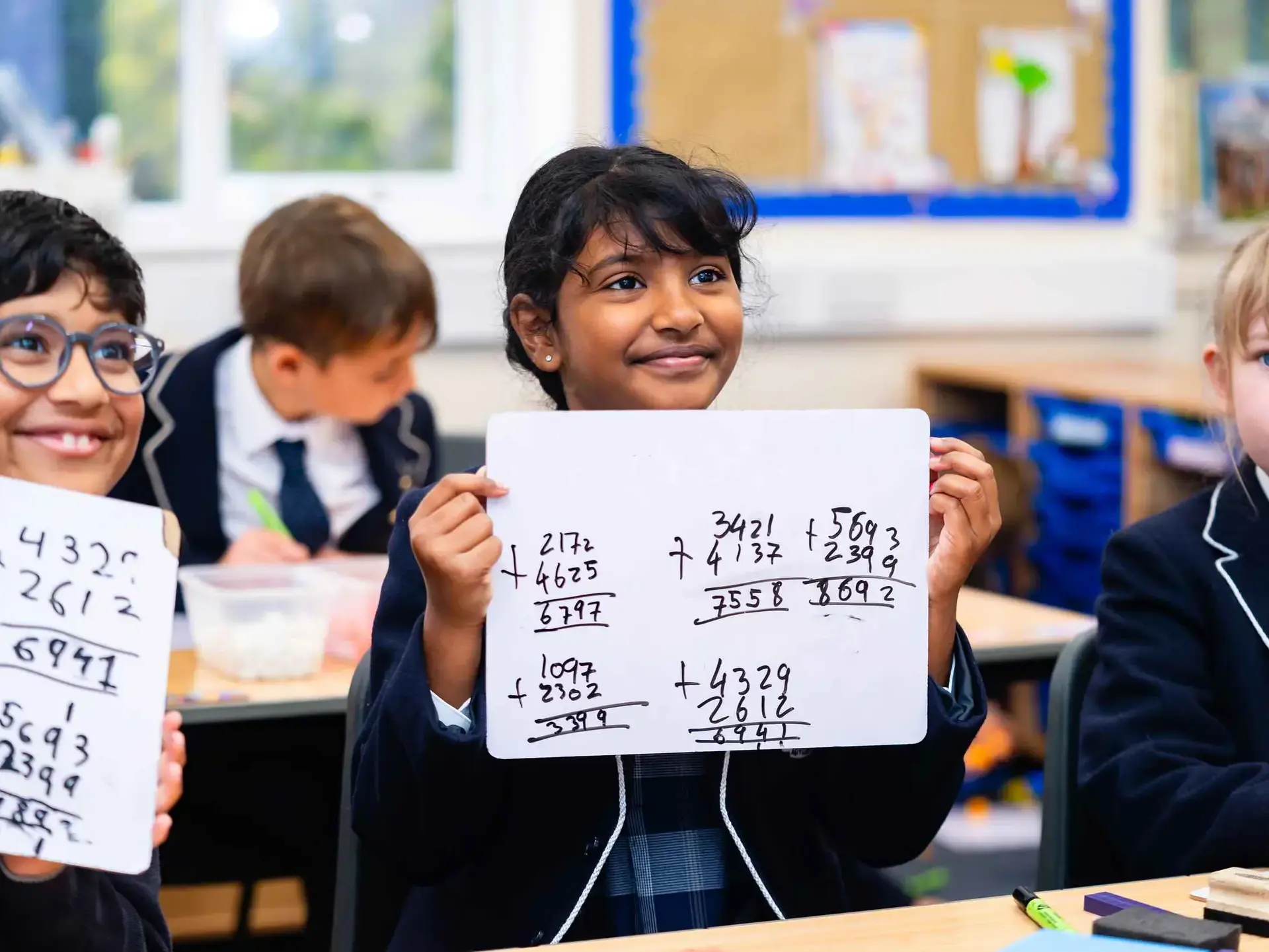
In Years 1 to 6, the maths curriculum follows the Maths Mastery approach.

  • In Year 1, the approach encourages children to articulate their learning and enjoy problem-solving using manipulatives.
  • In Year 2, the approach encourages children to articulate their learning and enjoy problem-solving, focusing more on multiplication fluency. Lessons begin with challenges and recall to reinforce prior learning.
  • In Year 3, they transition from manipulatives and models. Children articulate their learning with increased reasoning and justification of their methods.
  • In Year 4, maths skills are secure. They focus on mastering multiplication tables up to 12 x 12. They emphasise the application of skills in reasoning and justifying. Children articulate their learning and identify misconceptions in their work.
  • In Year 5, maths skills and computation fluency aid problem-solving, making reasoning and justifying enjoyable challenges.
  • In Year 6, maths lessons focus on justifying methods and solving complex problems.

See Learning Come Alive at Sherfield

Arrange a visit to sit in on lessons, meet our teachers and explore our beautiful learning environments.